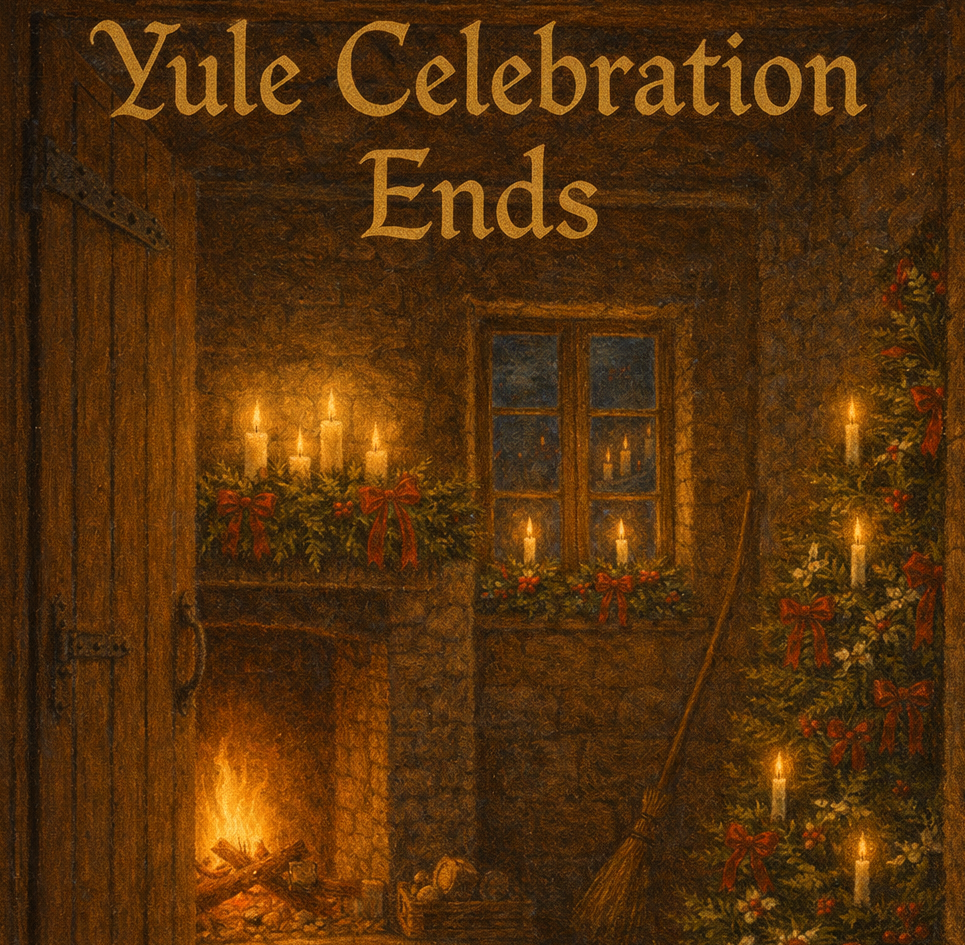
Yule Celebration Ends
It’s a blend of older Celtic midwinter customs and later Scottish folk traditions. Its roots lie in year-end pagan rites of purification, order, fire, and good fortune with the intention to ensure a strong beginning to the new year.
The “First footing,” the welcoming the first visitor of the new year, was believed to set the tone for the months ahead. And dark-haired guests carrying small gifts (salt, coal, whisky, shortbread) are considered especially auspicious. Homes are swept clean, the hearth well-tended, debts are settled, and old resentment or disorder are cleared out. Fire ceremonies, the ringing of bells, and communal singing helped mark the transition to the next cycle.


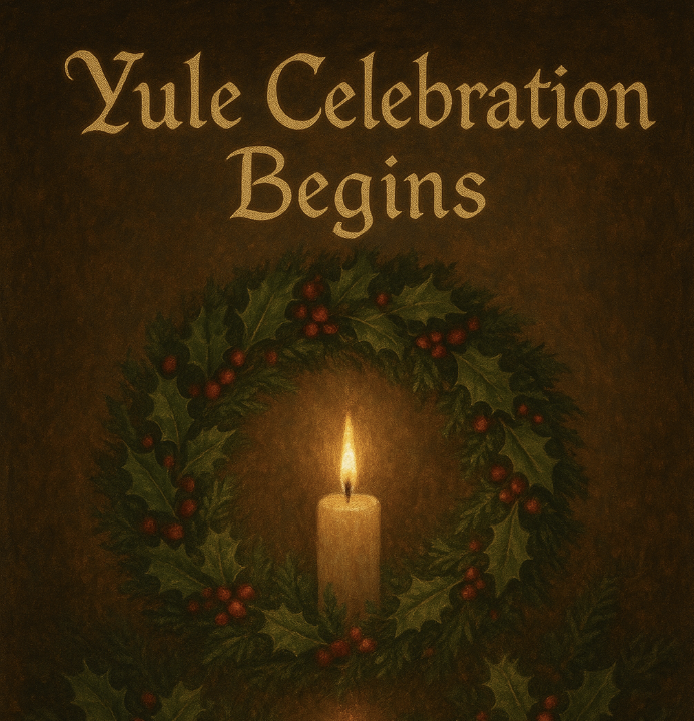
Yule Celebration Begins
Yule, also known as the winter solstice, typically occurs around December 21st in the Northern Hemisphere. It marks the longest night of the year and the gradual return of longer days. Historically, Yule has been celebrated by various cultures, particularly in Norse and Germanic traditions, and has evolved into a rich tapestry of rituals and celebrations in modern pagan practices.

Eve of Yule Celebration
Yule, celebrated during the winter solstice, is a time of reflection, rebirth, and various rituals that honor the return of the sun and the changing of the seasons.


Burger Burn 🍔Ramp Level at Gate F-5 for Burgers from 09:00am-09:00pm
From 9am to 9pm, stop by gate F-5, ramp level